
Key Takeaways
- For a typical home, the U.S. EPA says septic tanks are usually pumped every three to five years. Commercial systems usually need it sooner.
- Pump when sludge and scum fill about a third of the tank, so measure at each service instead of guessing.
- Colorado septic systems fall under Regulation 43, and your county health department can add its own rules.
- Septic pumping cost depends on tank size, access, distance and how often you schedule service. We quote each job.
If your business runs on a septic system, the tank works every hour you are open. If you pump it on time, it does its job quietly. However, if you wait too long, solids push into the drain field, which is the most expensive part of the system to fix. This guide explains how often to pump a septic tank and why commercial properties usually need service sooner than a home.
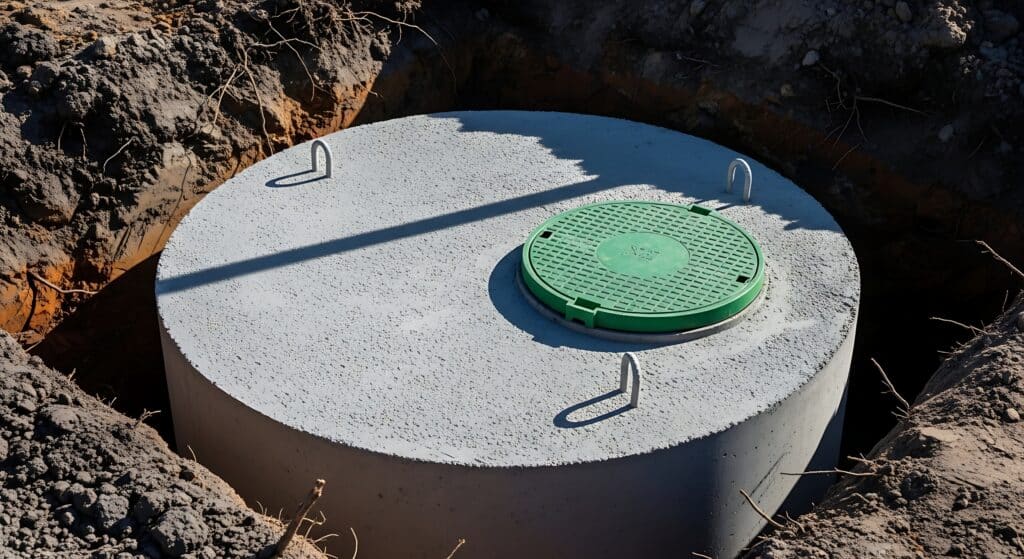
How Often to Pump a Septic Tank: The Short Answer
For a typical home, the U.S. EPA says septic tanks are usually pumped every three to five years, with an inspection at least every three years. Systems with pumps, floats or other mechanical parts should be inspected about once a year.
Commercial systems, however, are different. A restaurant, shop, office, school or rural business can send far more water and solids into the tank each day than a household does. Therefore, the same size tank fills faster. As a result, many commercial tanks need pumping more often than every three years. High-use sites may need it every year or sooner.
What Decides How Often to Pump a Septic Tank
- Daily flow. More people, longer hours, showers and kitchens all add water.
- Solids. Food waste and paper add up, and garbage disposals also fill a tank fast.
- Tank size. A smaller tank or a single compartment fills sooner.
- Grease. A kitchen on septic needs a working grease trap. Otherwise, grease that reaches the septic tank hardens and can clog the outlet and the drain field. See our grease trap services.
- System type. Pump tanks, alarms and treatment units need yearly checks.
The One-Third Rule
For that reason, the best way to know how often to pump a septic tank is to check what is actually in it. Inspection checklists used under Colorado's Regulation 43 call for pumping when sludge plus scum reach about a third of the first compartment. Because of this, our technician can measure both layers at each visit. Those numbers tell you whether to schedule the next pump-out sooner or later.
Signs Your Septic Tank Needs Pumping Now
- Slow drains or gurgling pipes across the building
- Sewage odor near the tank, the drain field or floor drains
- Soggy ground or unusually green grass over the drain field
- Backups in the lowest drains
- A high-water alarm on a pump tank
If you see any of these, call before the problem spreads to the drain field.
Colorado Septic Rules to Know
In Colorado, septic systems are called onsite wastewater treatment systems (OWTS). The state sets the baseline in Regulation 43, and each local public health agency adopts rules at least as strict. Some counties also require an inspection when a property changes hands. In Boulder County, for example, the tank must be pumped for a complete transfer inspection, and a pumping receipt is required.
Finally, use a licensed septic cleaner. McDonald Farms holds an El Paso County systems cleaner license and a Boulder County septic cleaner license. We also give you a manifest after every pump-out.
What Affects Septic Tank Pumping Cost
We do not post prices, because every system is different. Instead, our customer service team builds each quote around your site. These factors drive septic tank pumping cost:
- Tank size and the number of tanks
- Access to the lids, since buried lids take extra time
- Distance from our nearest yard
- How long it has been since the last pump-out
- How often you schedule service
In short, a regular schedule is easier to budget than an emergency call, and it protects the drain field.
How McDonald Farms Can Help
We pump commercial septic tanks across the Colorado Front Range, including Denver, Colorado Springs and Boulder. After the pump-out, waste goes to our permitted National Western facility in Denver, and you get the paperwork for your records. Emergency response is available 24/7.
Call (303) 772-4577 or request service online, and we will set up a schedule around your hours. See all of our septic services.
Septic Tank Pumping FAQ
How often should a commercial septic tank be pumped?
It depends on flow and solids. Many commercial tanks need pumping more often than the three to five years that is typical for homes. Measure sludge and scum at each service, and pump before they fill about a third of the tank.
Can I wait until there is a problem?
It is not a good idea. By the time drains back up, solids may already be in the drain field, which costs far more to repair than a pump-out.
Do septic additives replace pumping?
No. Additives are no substitute for pumping and cleaning. Meanwhile, solids still build up in the tank and must be removed.
Does a restaurant on septic need a grease trap?
In most cases, yes. Grease that reaches the septic tank hardens and can clog the outlet and the drain field, so keep the grease trap pumped on its own schedule.
How much does septic pumping cost?
We do not post prices. Cost depends on tank size, access, distance and how often you schedule service. Call (303) 772-4577 for a quote.