Key Insights
- Grease traps should generally be pumped every 1 to 3 months, though your actual schedule depends on the size of your operation and how much waste you generate.
- Follow the 25% rule: pump your trap when grease, solids, and wastewater together fill 25% of the trap's total capacity — waiting longer risks system failure.
- Three main factors determine how often you need service: the physical size of your trap, the daily volume of wastewater flowing through it, and the type of food your operation prepares.
- If you notice slow drains, foul odors in or around the kitchen, grease backing up into sinks, or visible buildup in the trap, it is already overdue for pumping.
- Colorado's FOG regulations require food service businesses to maintain their grease traps and keep documentation on file — pumping records, service dates, and waste disposal manifests included.
- A scheduled maintenance program removes the guesswork, keeps you compliant, and prevents the emergency pump-outs and costly repairs that come from neglecting the trap.
Most commercial grease traps need to be pumped every 1 to 3 months. That’s the honest answer. But “most” is doing a lot of work in that sentence — your actual schedule depends on the size of your trap, how busy your kitchen is, and what you’re cooking. A small diner and a high-volume fried chicken operation are not living by the same rules.
What doesn’t change is the standard: when grease, fats, and solids build up to 25% of your trap’s total capacity, it’s time to call. That’s the industry benchmark, and it’s what regulators in Colorado will be looking at if your operation gets inspected.
What Affects Grease Trap Pumping Frequency
There’s no universal calendar you can follow. Here’s what actually drives the schedule:
Trap Size
A smaller trap fills faster. Simple as that. A 50-gallon trap in a moderate-volume kitchen may need service every 4 to 6 weeks. A 1,000-gallon in-ground interceptor at a larger facility might go 3 months between pumps. Know your capacity — it’s the starting point for everything else.
Kitchen Volume
The more meals you’re turning out, the more grease you’re generating. A restaurant serving 150 covers a day produces significantly more FOG (fats, oils, and grease) than a café doing 40. Higher volume means more frequent pumping, period.
Type of Food Being Prepared
Fried foods, heavy sauces, and meat-intensive menus push far more grease into your drains than a lighter prep operation. A sandwich shop and a burger joint are not the same situation. If frying is central to your menu, build that into your maintenance plan. It’s not unusual for high-fry operations to need service every 4 to 6 weeks regardless of trap size.
Number of Meals Served Per Day
This connects directly to volume, but it’s worth calling out separately. A breakfast-and-lunch operation with one rush per day has a different load profile than a restaurant running three full service periods. Track your daily meal count — it’s useful data when you’re trying to nail down a realistic schedule.
The 25% Rule: What It Means and Why It Matters
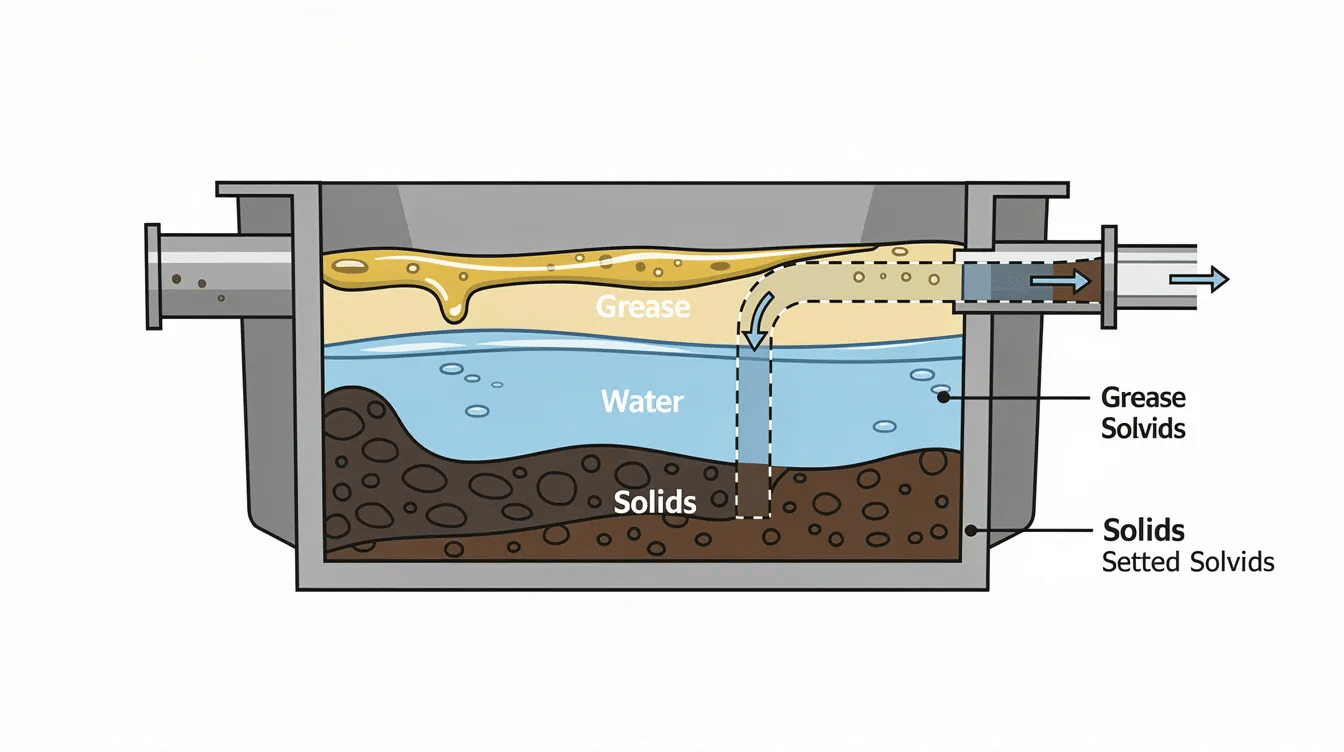
The 25% rule is the standard the industry runs on: your grease trap should be pumped before the combined layer of FOG and settled solids reaches 25% of the trap’s total liquid capacity.
Why 25%? Beyond that threshold, the trap can no longer do its job effectively. Grease starts bypassing the baffles and moving downstream — into your lateral lines, the municipal sewer, and eventually the wastewater treatment system. That’s where it becomes your problem in a different way.
In practical terms:
- A 100-gallon trap needs service when it accumulates about 25 gallons of grease and solids
- A 500-gallon interceptor triggers service at roughly 125 gallons of buildup
- A 1,000-gallon unit should be pumped before you hit 250 gallons of accumulation
Your service provider should measure and document this level at every visit. If they’re not, that’s worth asking about.
Colorado FOG Programs and Compliance Requirements
Colorado municipalities take FOG management seriously, and several have formal programs in place. Denver, Colorado Springs, Fort Collins, Aurora, and other Front Range cities all have FOG ordinances that require food service establishments to maintain grease interceptors and keep records of service.
What this typically means for your operation:
- Documented pumping intervals — most programs require proof that your trap is being serviced regularly, not just when something goes wrong
- Service manifests — your pump-out provider should issue a waste hauling manifest for each service visit; you’re typically required to keep these on file for inspection
- Compliance inspections — municipal inspectors can and do show up unannounced; if your trap is out of compliance, you’re looking at fines and potentially a required shutdown for remediation
The exact requirements vary by municipality, so if you’re operating in a city with a formal FOG program, get familiar with their specific documentation requirements. When in doubt, a reliable service provider who operates in your area will know what’s expected.
Signs Your Grease Trap Is Overdue for Service
If you’re seeing any of these, don’t wait for the next scheduled appointment:
Slow drains throughout the kitchen. This is usually the first thing staff notices. When the trap is backing up, drainage across sinks and floor drains slows down. It’s a reliable early warning.
Grease odors. A properly maintained trap won’t smell much. When you start getting that rotten-grease odor coming up from drains — especially first thing in the morning before cooking starts — the trap is overloaded.
Backed-up sinks. More advanced than slow drains. If kitchen sinks are backing up, you likely have a trap that is well past the 25% threshold and possibly a partial blockage downstream.
Grease in the drain field or sewer lateral. If grease is showing up where it shouldn’t — in your exterior cleanout or your property’s drain field — the trap has been bypassed. This is a significant problem that needs immediate attention.
Don’t wait for a backup to schedule service. By the time you’re dealing with a real blockage, you’re also dealing with lost kitchen time, emergency service rates, and potential compliance issues.
Grease Trap FAQ
Can I clean my grease trap myself?
Technically yes, but it’s not advisable for most commercial operations. Grease trap waste is classified as a non-hazardous liquid waste, but it still requires proper disposal — you can’t just dump it in the dumpster or pour it down another drain. Licensed waste haulers are required to transport it to an approved facility. DIY pumping also means no service manifest, which can create a documentation gap if you’re ever audited for FOG compliance. For most food service operators, a licensed service provider is the practical choice.
What happens if I don’t pump regularly?
The problems stack up quickly. First, your trap stops working and grease bypasses into the sewer system. That leads to blockages in your lateral lines, which means expensive emergency plumbing. If grease reaches the municipal system, you may face fines from the city’s FOG program. Repeated violations can trigger a compliance order requiring facility upgrades at your expense. Beyond the regulatory side, a failed grease trap is a health code issue — inspectors will flag it.
Do I need a service record or manifest for compliance?
Yes, in most Colorado municipalities with FOG programs. Your service provider should generate a waste hauling manifest at every pump-out. Keep these on file — inspectors typically want to see the last 12 months of records. If you’re unsure what your specific municipality requires, ask your service provider or check directly with your city’s sewer or environmental services department.
How do I know what size grease trap I have?
Your trap should have been permitted and sized when it was installed, and that information should be in your building permit records or a plat of your facility. If you don’t have that documentation, a service provider can measure capacity during a service visit. Knowing your size is essential for setting the right maintenance schedule.
Let McDonald Farms Handle the Schedule for You
Figuring out your pumping frequency, tracking service dates, and making sure your manifests are in order is a lot to manage alongside running a kitchen. McDonald Farms offers scheduled grease trap maintenance programs across Colorado, so you don’t have to keep track of it yourself. We handle the service, provide the documentation, and make sure you stay in front of compliance requirements rather than reacting to them.
We’ve been serving Colorado businesses since 1966. If your trap is overdue — or if you just want to get on a regular schedule — give us a call at (303) 772-4577.


