Key Takeaways
- If your shop has floor drains and you work on vehicles, you almost certainly have an oil-water separator.
- Colorado codes and city ordinances require you to keep it maintained.
- Service is generally needed every 30 to 90 days, depending on the unit size and your wastewater volume. Some cities set their own schedule.
- A neglected separator can cause backed-up drains, failed inspections, and costly fines.
- We have handled pretreatment system maintenance in Colorado since 1966, and we schedule around your shop hours. Call (303) 772-4577.
If you operate an auto repair shop, dealership service bay, car wash, or fleet maintenance facility in Colorado, there is a pretreatment device underneath your floor drains that is doing a critical job — and it needs regular service to keep doing it.
Oil-water separators (also called sand-oil separators or grit traps) are not optional equipment. They are required by Colorado building codes and municipal pretreatment ordinances for virtually any vehicle service facility that generates oily wastewater. They are also subject to inspection and maintenance requirements that vary by municipality — and when they fail or go unmaintained, the consequences include backed-up floor drains, failed pretreatment inspections, and environmental fines that can reach tens of thousands of dollars per day.
McDonald Farms has been handling liquid waste and pretreatment system maintenance across Colorado since 1966. This guide breaks down what auto shop owners need to know about oil-water separator compliance in Colorado — and what a proper service looks like.
What Is an Oil-Water Separator and Why Does Your Shop Have One?
An oil-water separator is an underground pretreatment chamber — typically installed in or adjacent to your service bay — that captures oil, grease, sludge, and grit before wastewater from your floor drains enters the public sewer system.
When a mechanic drains fluids, washes down a bay floor, or uses a pressure washer on engine components, that runoff contains petroleum hydrocarbons, sediment, and chemicals that cannot legally be discharged directly to the municipal sewer. The separator settles heavy solids to the bottom and allows lighter oils to float to the top, releasing cleaner water from the middle layer into the sewer outflow.
Colorado’s International Plumbing Code (IPC) — adopted statewide — requires oil separators in garages, service stations, and vehicle repair facilities. Most Colorado municipalities layer additional pretreatment ordinances on top of state code. Brighton, for example, requires all petroleum, oil, and sand (POS) facilities — including automotive service or repair garages, car wash facilities, auto body shops, and machine shops — to install and maintain a sand-oil separator as a condition of discharging to the public sewer.
The short version: if your shop has floor drains and you work on vehicles, you almost certainly have an oil-water separator, and you are legally obligated to keep it maintained and functioning.
How Often Does an Oil-Water Separator Need to Be Serviced in Colorado?
This is where many auto shop owners run into compliance problems — not because they are ignoring the unit, but because they do not have a clear service schedule.
Colorado municipalities and EPA guidelines generally require oil-water separator service every 30 to 90 days, depending on the size of the unit and the volume of wastewater your facility generates. Some municipalities are more prescriptive:
- Brighton, CO requires sand-oil separators to be pumped every 120 days under city ordinance, with smaller sand traps cleaned out every 7 days
- Rifle, CO requires copies of cleaning and maintenance records to be submitted to the Utility Department within a set window after each service
- Other Colorado municipalities with active industrial pretreatment programs — including Colorado Springs, Denver, and Pueblo — conduct periodic inspections and may request maintenance documentation on demand
The practical answer for most Colorado auto shops: schedule service every 90 days at a minimum. Higher-volume shops — those running multiple bays, operating a car wash, or handling heavy equipment — should service more frequently. If your unit has smaller inlet traps, those may need monthly or bi-weekly cleaning regardless of when the main chamber was last pumped.
Your municipal utility or public works department can tell you the specific ordinance that applies to your address. If you are unsure, McDonald Farms can help you determine the right schedule based on your facility type and local requirements.
Schedule Your Oil-Water Separator Service
Does your Oil-Water Separator need to be pumped out? Call the specialist that serves the greater Rocky Mountain Region.
What Happens When an Oil-Water Separator Is Not Maintained?
Neglecting your separator is not a low-stakes decision. The consequences compound quickly:
Operational Problems
When oil, sludge, and grit accumulate past capacity, the separator loses its ability to function. Solids bypass the chamber and enter the sewer line, causing blockages in your drain system. Floor drains back up. Service bays become unusable. What would have been a scheduled pump-out turns into an emergency call and a repair bill.
Failed Inspections
Colorado municipalities with industrial pretreatment programs inspect commercial facilities — often without advance notice. If an inspector finds your separator overloaded, non-functional, or without documentation of recent service, you are looking at a notice of violation. Depending on your municipality’s enforcement posture, that can trigger a compliance schedule, increased inspection frequency, or escalating penalties.
Environmental Liability and Federal Fines
When a failing separator allows oil and petroleum hydrocarbons to discharge to the sewer or reach stormwater systems, federal enforcement enters the picture. The Clean Water Act authorizes penalties that start at $67,544 per day for violations involving a sheen discharge. The EPA’s standard civil penalty range for negligent violations is $10,000 to $25,000 per day. Environmental remediation costs — if contamination reaches groundwater — can dwarf those figures.
These are not theoretical risks. The EPA and Colorado Department of Public Health and Environment (CDPHE) actively enforce pretreatment requirements on commercial and industrial facilities, including auto shops.
Loss of Discharge Authorization
In severe cases, a municipality can revoke a facility’s authorization to discharge to the public sewer until the pretreatment system is brought into compliance. For an auto shop, that effectively means you cannot operate your service bays until the issue is resolved.
What Does Professional Oil-Water Separator Service Include?
A proper service call from a licensed liquid waste hauler covers more than just pumping the chamber. McDonald Farms’ oil-water separator and grit trap service for Colorado auto shops includes:
- Full pump-out of accumulated oil, sludge, grit, and wastewater from the separator chamber
- Inspection of inlet and outlet baffles to ensure the separation process is functioning correctly
- Cleaning of connected inlet traps and floor drain lines feeding into the separator
- Visual inspection of the chamber walls, cover, and access points for damage or deterioration
- Proper waste disposal — all material removed from your separator is transported and disposed of in compliance with Colorado liquid waste regulations; you are not left managing hazardous waste
- Service documentation — records of the service date, waste volume, and disposal method, which you keep on file for regulatory compliance
Documentation matters. If your municipality asks for maintenance records during an inspection, a professional service provider can furnish the paperwork that demonstrates ongoing compliance. Doing the work yourself — or having an employee attempt a partial cleanout — typically does not produce the documentation regulators expect.
Who Needs Oil-Water Separator Maintenance in Colorado?
If any of the following describe your operation, you need regular oil-water separator service:
- Auto repair and general service shops — oil changes, brake work, engine repair, fluid services
- Dealership service departments — high-volume bays generate significant oily wastewater
- Transmission and drivetrain shops
- Fleet maintenance facilities — trucking companies, government vehicle yards, commercial equipment operators
- Car washes and detailing shops — especially those with engine wash or undercarriage services
- Auto body and collision repair shops — paint prep areas and wash bays
- Tire and alignment shops with wash-down capabilities
- Machine shops with metalworking fluid discharge
- Heavy equipment maintenance yards
If your facility has floor drains connected to the sewer and you work on vehicles, a separator almost certainly exists on your property — whether you have been thinking about it or not.
Why Colorado Auto Shops Choose McDonald Farms
McDonald Farms is a Colorado company — based here, operating here, and familiar with the municipal pretreatment programs across the state. We have been handling liquid waste service for commercial and industrial facilities across Colorado and the Rocky Mountain region since 1966.
What that means for your shop:
- We know the local regulations. Whether your shop is in Colorado Springs, Pueblo, Fort Collins, Denver, or a smaller Colorado municipality, we understand the specific requirements that apply to your facility and can help you stay ahead of them.
- We handle compliant disposal. Every gallon we pump from your separator is transported and disposed of through licensed channels. You receive documentation that stands up to regulatory scrutiny.
- We can build a service schedule around your operation. Rather than waiting for a problem to prompt a call, we can establish a recurring service interval that keeps your separator functioning and your compliance records current.
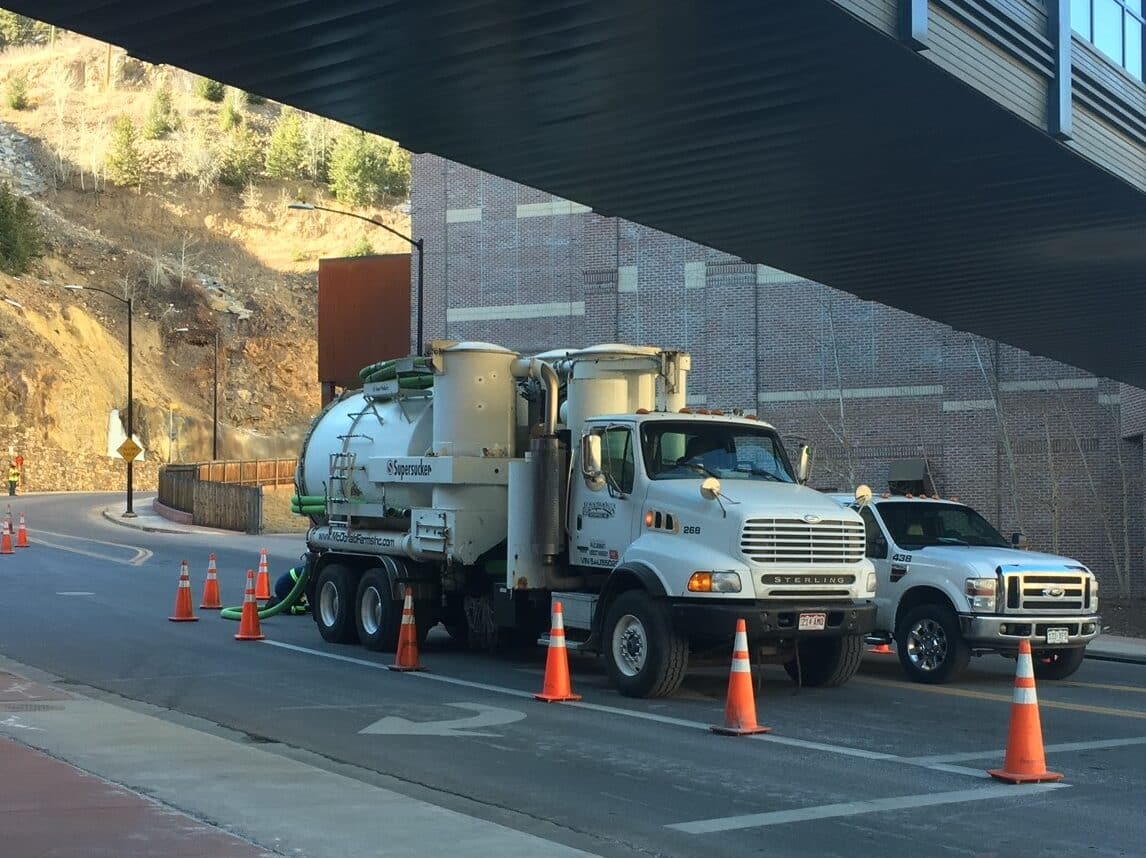
- We service more than just the separator. McDonald Farms also handles vacuum truck service, hydro-jetting for drain lines, and wastewater treatment — so if a service call reveals a drain line backup or a related issue, we can address it in the same visit.
Frequently Asked Questions: Oil-Water Separator Maintenance for Colorado Auto Shops
How do I know if my shop has an oil-water separator?
Most vehicle service facilities built after the adoption of the International Plumbing Code have one — typically installed in or beneath the service bay floor, accessible via a ground-level cover or manhole. If your shop was built before statewide code adoption, check with your local utility or public works department. Many municipalities require new permits and inspections that would have flagged the requirement. If you are unsure, a McDonald Farms technician can inspect your facility.
How often do I need to have my oil-water separator serviced?
Colorado EPA guidelines and municipal ordinances generally require service every 30 to 90 days. Specific municipalities have their own requirements — Brighton requires pump-outs every 120 days with weekly cleanouts of smaller traps. High-volume shops should service more frequently. Contact McDonald Farms at (303) 772-4577 to discuss the right schedule for your facility.
Do I need to keep records of my oil-water separator cleanings?
Yes. Most Colorado municipalities with pretreatment programs require maintenance records and may request them during an inspection. McDonald Farms provides service documentation with every visit that you can keep on file for compliance purposes.
Can I clean my oil-water separator myself?
You can perform basic maintenance on accessible inlet traps, but full pump-outs of the separator chamber require a licensed liquid waste hauler with the equipment to handle and properly dispose of oily waste. DIY pump-outs typically do not produce the documentation regulators expect, and improper disposal of separator waste creates additional environmental liability.
What happens if my oil-water separator fails an inspection?
A failed inspection typically results in a notice of violation from your municipality or the CDPHE. Depending on severity, this can mean a compliance schedule with deadlines, increased inspection frequency, civil penalties, or — in cases involving an active discharge violation — suspension of your sewer discharge authorization until the system is brought into compliance.
Does McDonald Farms service oil-water separators statewide?
Yes. McDonald Farms serves auto shops and commercial facilities across Colorado and the Rocky Mountain region, including Colorado Springs, Pueblo, Denver, Fort Collins, and surrounding areas. Call (303) 772-4577 or visit our service request page to confirm coverage for your location.
Schedule Your Oil-Water Separator Service
Staying compliant does not require a complicated process. McDonald Farms makes it straightforward: we come out, service the unit, document the work, and dispose of the waste properly. You get a clean separator, current compliance records, and one less thing to manage.
If it has been more than 90 days since your last service — or if you are not sure when the separator was last cleaned — now is the right time to get it back on schedule before your next inspection cycle.