If you’ve ever sat in traffic on I-25 watching a line of semi-trucks stretch to the horizon, you already understand part of the problem. Colorado’s highway system was never designed to handle the freight volumes the state now moves on a daily basis. The Front Range corridor — from Pueblo through Denver and up to Fort Collins — is one of the most congested stretches of road in the Mountain West, and that congestion costs businesses real money in fuel, driver hours, and delayed deliveries.
Rail transloading offers a way out of that bottleneck. It’s not a niche solution for large shippers anymore — it’s increasingly how smart Colorado businesses are managing freight costs, supply chain reliability, and long-haul logistics. McDonald Farms Enterprises has been helping companies across the region take advantage of it, and the results speak for themselves.
What Is Railroad Transloading, and Why Does It Matter in Colorado?
Transloading is the process of transferring freight from one mode of transportation to another — in this case, from a railcar to a truck. It happens at a transload facility, which is essentially a bridge between the national rail network and the local delivery trucks that complete the final leg of the journey.
Think of it like a regional airport. Goods arrive on long-haul rail from across the country, get transferred to trucks at the facility, and then head to their final destination. For businesses that don’t have a rail spur on their property — which is most of them — transloading is what makes rail freight accessible.
Colorado is actually well-positioned for this. Both BNSF and Union Pacific operate extensive networks across the state, with strong coverage along the Front Range and connections into the mountain corridors. That infrastructure creates real opportunities for businesses that know how to use it.
The Math Behind the Savings
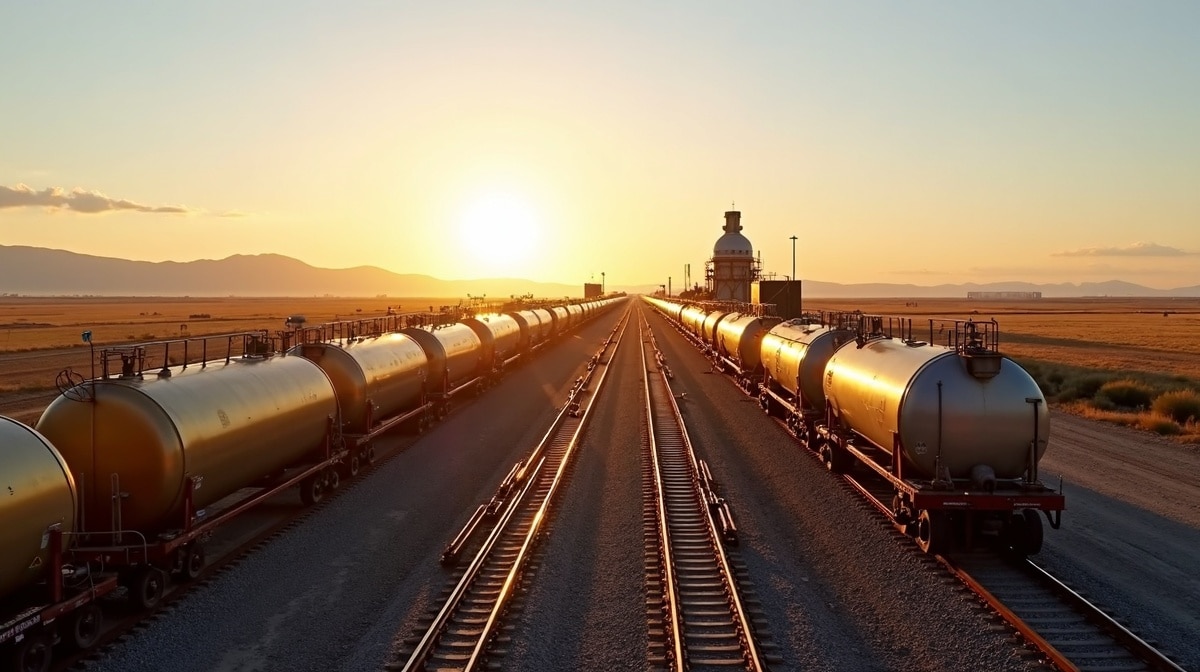
Here’s a number worth sitting with: a single railcar can move the equivalent of what four fully loaded semi-trucks can. One train can replace more than a hundred highway trucks. On a per-mile basis, trains move a ton of freight nearly 500 miles on a single gallon of fuel — a ratio no diesel truck can come close to matching.
Those aren’t just efficiency statistics. They translate directly to cost.
For businesses shipping heavy bulk commodities — construction materials, agricultural products, energy inputs, manufacturing supplies — the difference between highway-only logistics and a rail-plus-truck hybrid can be as much as 30% in long-haul freight costs. Driver shortages and diesel price volatility have made that gap even wider in recent years, because trucking rates move with fuel markets in ways that rail contracts don’t.
The labor math is equally striking. A two-person locomotive crew manages what would require hundreds of commercial drivers to move the same volume. When the trucking industry is short on qualified drivers — and it has been, consistently — that’s not just a cost issue. It’s a reliability issue.
How the Process Actually Works
The mechanics of transloading are straightforward once you see it in action. Here’s how a typical shipment moves:
Step 1 — Inbound rail delivery. Your freight arrives at the transload facility via the national rail network, often handed off to a local short-line railroad for the final portion of the rail journey. McDonald Farms coordinates this inbound logistics so the timing lines up with your operational schedule.
Step 2 — Transfer at the facility. Specialized equipment at the facility — forklifts, conveyors, pneumatic systems depending on the commodity — moves your freight from the railcar to waiting trucks. For bulk materials, this can happen quickly and with minimal handling loss.
Step 3 — Last-mile truck delivery. From the facility, trucks handle the short haul to your location. This is where the efficiency really shows — instead of long-haul trucks making expensive runs across multiple states, you’re using regional carriers doing shorter, more predictable routes.
What makes this model particularly valuable in Colorado is geography. When I-70 closes over Vail Pass due to a storm — and it will — businesses that rely entirely on highway freight have no good options. They wait. Rail freight coming into a Front Range transload facility doesn’t share that vulnerability. Your goods are already off the mountain before the weather event becomes your problem.
What McDonald Farms Brings to Rail Logistics in Colorado
McDonald Farms Enterprises has been operating in Colorado long enough to understand what the state’s logistics landscape actually looks like — not just in theory, but in practice. That means knowing which rail corridors move reliably, which facilities can handle which commodities, and how to structure a transload arrangement that fits your business rather than forcing your business to fit a template.
Their rail services are built around a few core strengths:
Bulk commodity expertise. Whether you’re moving agricultural inputs, construction materials, or industrial products, McDonald Farms has the equipment and the operational experience to handle high-volume transfers efficiently. Bulk freight is where rail logistics really shines, and it’s where their team is most at home.
Front Range and regional coverage. McDonald Farms serves businesses across Colorado’s Front Range corridor and beyond. If you’re operating in Denver, Colorado Springs, Pueblo, or the surrounding areas, you’re in their wheelhouse.
Flexibility and coordination. Good transloading isn’t just about moving freight — it’s about timing it right. McDonald Farms works with shippers to coordinate inbound rail schedules with outbound truck delivery windows, reducing the risk of goods sitting at a facility longer than necessary.
Local knowledge. Knowing the Colorado rail network — which lines connect where, how short-line handoffs work, where capacity is available — is something that takes years to develop. McDonald Farms brings that knowledge to every client engagement.
Is Rail Transloading the Right Fit for Your Operation?
Rail isn’t the right answer for every shipment. Time-sensitive small-parcel freight generally still moves better by truck. But for businesses moving significant volumes of bulk or heavy commodities on a recurring basis, the case for rail is usually strong.
Here’s a practical way to think through it:
Volume. If you’re moving multiple truckloads of the same commodity on a regular basis, you’re likely at a scale where rail economics start to work in your favor. The more volume, the more compelling the math.
Freight type. Rail handles bulk materials, raw inputs, and heavy goods particularly well. Agricultural products, building materials, aggregates, industrial chemicals — these are natural fits. Mixed retail or highly time-sensitive freight is less ideal.
Geography. Where is your freight coming from? If it’s traveling more than a few hundred miles, especially across flat terrain where rail runs efficiently, transloading almost certainly saves money versus all-highway.
Supply chain resilience. Even if the per-shipment savings are modest, adding a rail component to your logistics strategy gives you a backup option when highway conditions deteriorate. That has real value in Colorado, where seasonal closures and weather events are part of life.
If any of those points resonate, it’s worth a conversation with McDonald Farms. They can walk through your specific freight profile and give you a realistic picture of what transloading could mean for your costs and your supply chain.
The Bigger Picture for Colorado Logistics
Colorado’s freight challenge isn’t going to solve itself. The state’s population keeps growing, the construction and agriculture sectors keep demanding more material movement, and highway infrastructure improvements take years to plan and build. Businesses that figure out how to move freight more efficiently now will have a meaningful cost and reliability advantage over competitors who keep doing things the way they’ve always been done.
Rail transloading is one of the most underutilized tools available — not because it doesn’t work, but because a lot of businesses haven’t had a reliable local partner to help them access it. McDonald Farms is changing that for Colorado companies willing to think beyond the truck.
Ready to find out if rail transloading makes sense for your business? Contact McDonald Farms Enterprises to talk through your freight needs and explore what a rail logistics solution could look like.